HKEX · Hong Kong · Residential Property Services / Hangzhou

Binjiang Service Group Co. Ltd. (3316.HK)

"A China developer discount applied to a Hangzhou property manager with 37.6% ROE, roughly RMB 3,625m of net cash, 100% renewal on mature projects and an operating business implicitly priced at about 3.8× trailing earnings."

Archive No. 02 February 2026 English & Italian Author: Alessandro Montalbano
Valuation snapshot
P/E TTM
9.71×
EV / EBITDA
2.93×
Net Cash / Market Cap
62%
ROE
37.6%
The investment case

Binjiang Service Group does not build apartments, sell them, or hold land. It manages residential communities in Hangzhou: cleaning, maintenance, security, and the monthly fee streams attached to occupied buildings. Most of the market still prices it through the lens of China's property developer crisis. That description is incomplete.

The moat is local density plus switching friction. Around 63.6% of Binjiang's managed area is concentrated in Hangzhou, which lets the company run denser maintenance teams, centralized procurement, and tighter quality control than fragmented peers. That shows up in economics: property management services have earned roughly 18-20% gross margins versus an industry range closer to 10-15%. The contract is sticky because replacing a manager requires a homeowners' association vote and a formal tender process. In 1H2025, Binjiang reported a 100% renewal rate on mature projects and a 14.1% average fee increase across ten projects. Commodity businesses rarely raise price and keep every mature customer.

The growth is already contracted. Binjiang managed 75.1 million square meters in 1H2025 and had another 96.4 million square meters under signed agreement or in the delivery pipeline. Buildings under construction become completed buildings, and completed buildings need a property manager. Revenue still grew 22.7% year over year at the height of the China-property downturn. That matters because the fee base is tied to occupied communities and recurring services, not to one-off apartment sales.

The earnings quality is high and the balance sheet is a fortress. As of June 30, 2025, Binjiang held RMB 3,627m of liquid financial assets against just RMB 2.3m of financial debt, leaving roughly RMB 3,625m of net cash, approximately HK$3.9B. That is about 62% of the company's market capitalization. ROE of 37.6% is being earned without leverage, and the dividend has increased every year since listing. The market is paying a distressed multiple for a business with recurring revenue, no balance-sheet stress, and no need to borrow to produce its returns.

Strip out the net cash and the market is valuing the operating business at roughly HK$2.36B, or about 3.8× trailing earnings, for a company with recurring fees, contractual growth, and 37.6% ROE. The key watch item is parent-developer contagion and the wider China-property label, which is exactly why the opportunity exists in the first place.
Why the mispricing persists
  • Guilt by association: between 2021 and 2024, Hong Kong-listed property managers were sold alongside distressed developers as receivables, governance, and parent-company risk imploded across the sector. Binjiang was swept into the same basket before most investors checked whether its economics actually looked anything like a leveraged developer.
  • Too small and too boring for institutions: apartment maintenance in Hangzhou is not a theme that screens well. With limited liquidity and a local-service business that looks mundane on first pass, many institutions and quantitative models never get far enough to see the renewal rates, fee increases, or balance-sheet strength.
  • Family control plus China exposure trigger automatic exclusion: the founding families control the stock, the Qi family also controls the parent developer, and many global investors stop there. That filter explains the discount, but it also means few people do the work required to distinguish a property manager from a developer.
Read the full report.
Three valuation scenarios. All assumptions visible. No gate.
Download PDF (English) →
Also in the archive
FILA.MI
Euronext Milan · Italy · Consumer Brands
FILA S.p.A.

"A global stationery business with 25 iconic brands, implicitly priced at 3.5× EBITDA after stripping out a €348m listed Indian stake the market appears to ignore entirely."

February 2026 · 20 pages · Available in English & Italian
Archive
No. 01
EV/EBITDA
3.5×
P/E TTM
8.2×
Mkt Cap
€470m
FCF Yield
~13%
Read full report →
Founder
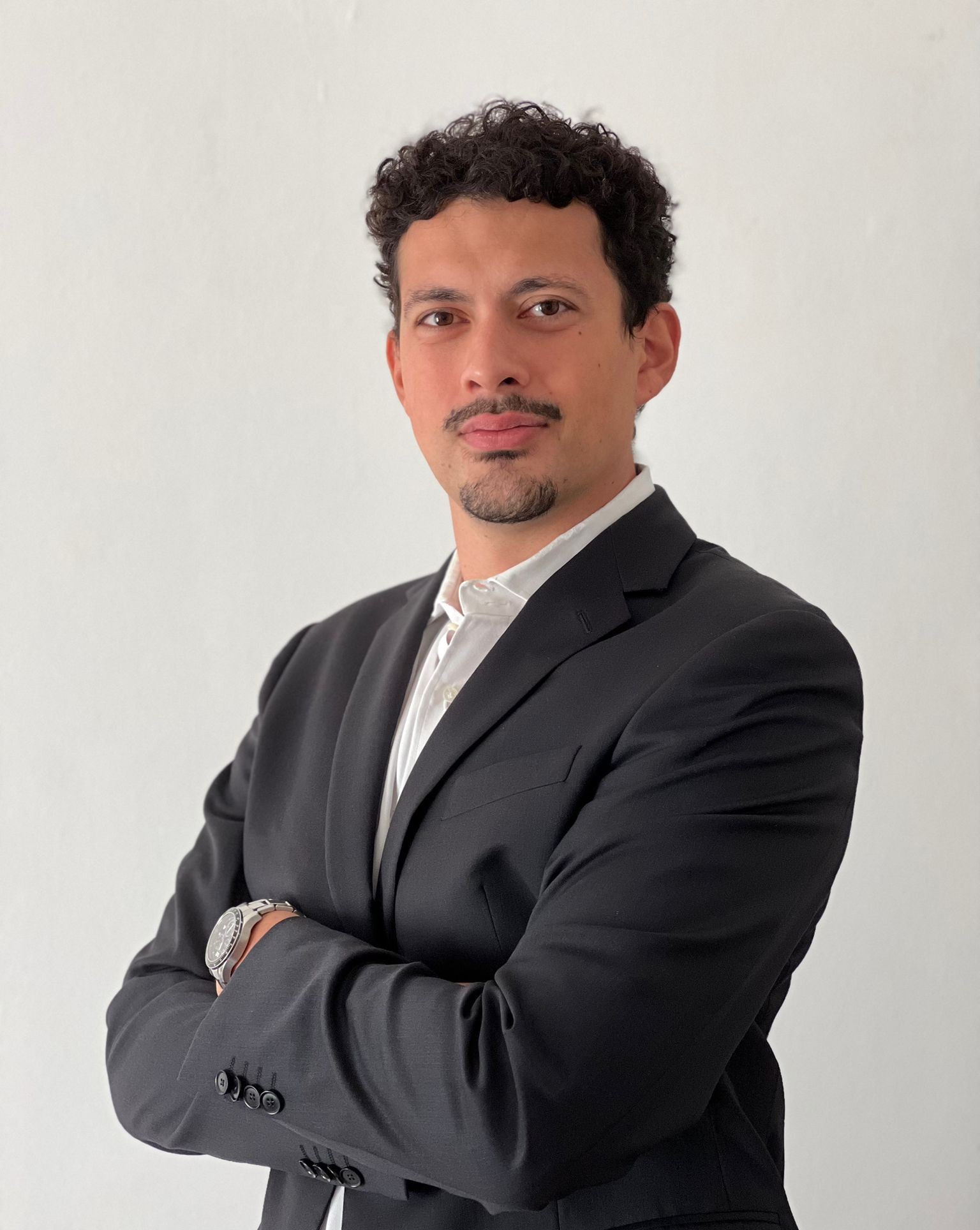
Alessandro Montalbano
Signed by

Alessandro Montalbano

Founder · Research Analyst, Sifter Research
A decade of personal investing · Former M&A analyst · Quantitative Finance & Management Engineering

Over the years, I've spent a lot of time on investment platforms, forums, newsletters and communities. Great ideas everywhere: tickers, theses, one-liners that make you think. But I always had the same problem: when I find something interesting, I still have to do all the research myself. Every time.

I looked for research that was actually complete, a real deep-dive where you can follow the reasoning, check the numbers and disagree with the conclusion if you want. Rarely found it. Especially on small-caps, where institutional coverage is thin and mispricing opportunities are real. So I built it myself.

Read more about the process and the checklist →
"The goal is to understand a few neglected businesses better than the market does."

This report represents the personal opinion of the author and is published for informational and educational purposes only. It does not constitute investment advice, a solicitation to buy or sell securities, or a recommendation of any kind. All analysis is based on publicly available information. The author may hold positions in the securities discussed. Investing involves risk of loss. Past analysis does not guarantee future results. Nothing here should be relied upon as the basis for any investment decision.